Home organisation · less waste
Do you know what you have at home — and when it expires?
Fewer forgotten groceries, less unnecessary shopping and a clearer view of your cupboards, pantry and household storage.
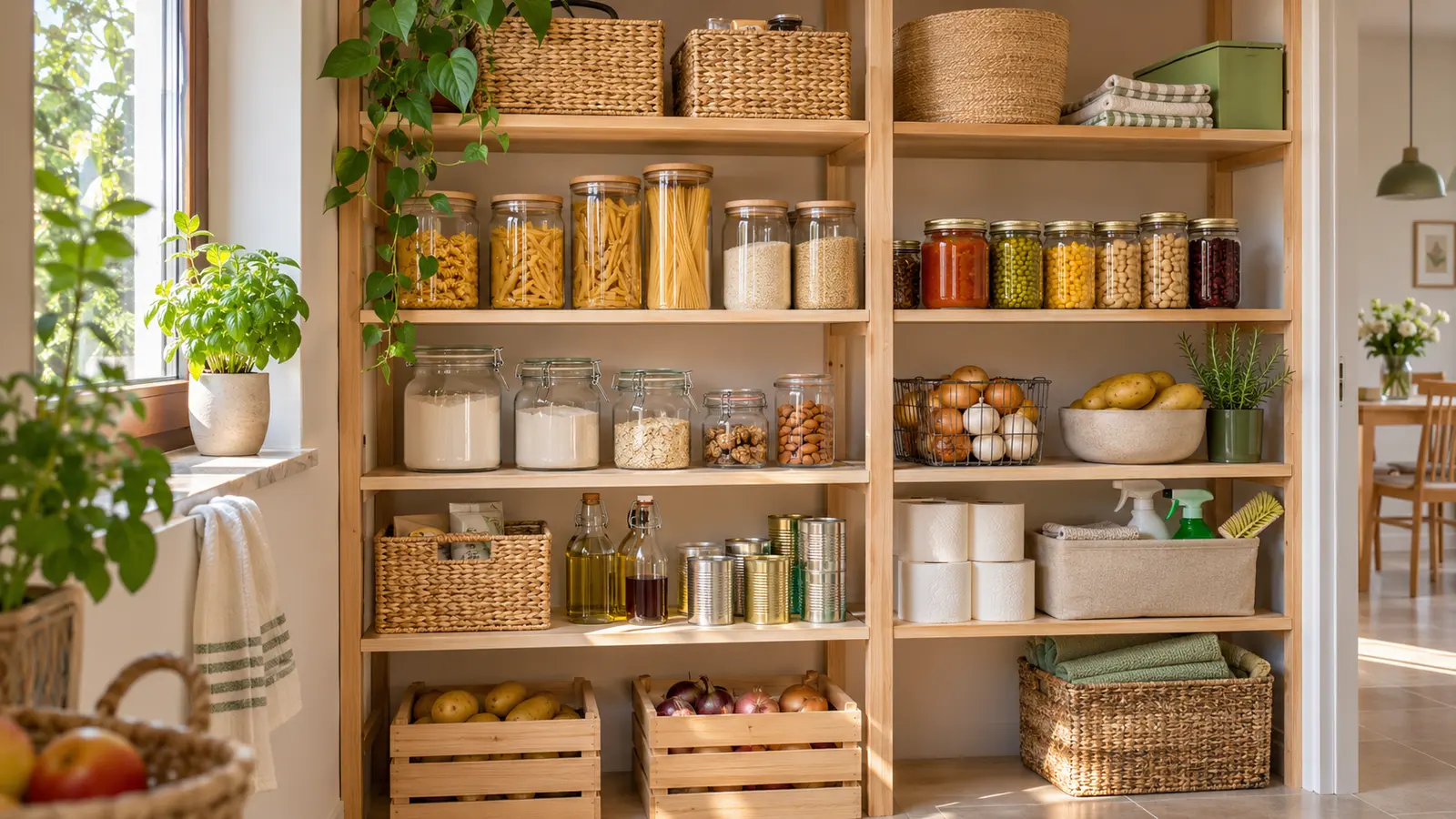
A familiar problem
A tidy shelf does not mean we know what is on it
When we cannot see what we have, we buy “just in case”. When dates go unchecked, older products stay hidden behind newer ones. The answer is not to buy less at any cost, but to shop with more intention and use what is already at home.
Start without a major clear-out
One shelf is a good enough beginning
Take the products out, group them and record the things you buy most often or tend to forget. A simple split into “used regularly”, “reserve supplies” and “use soon” creates an immediate overview.
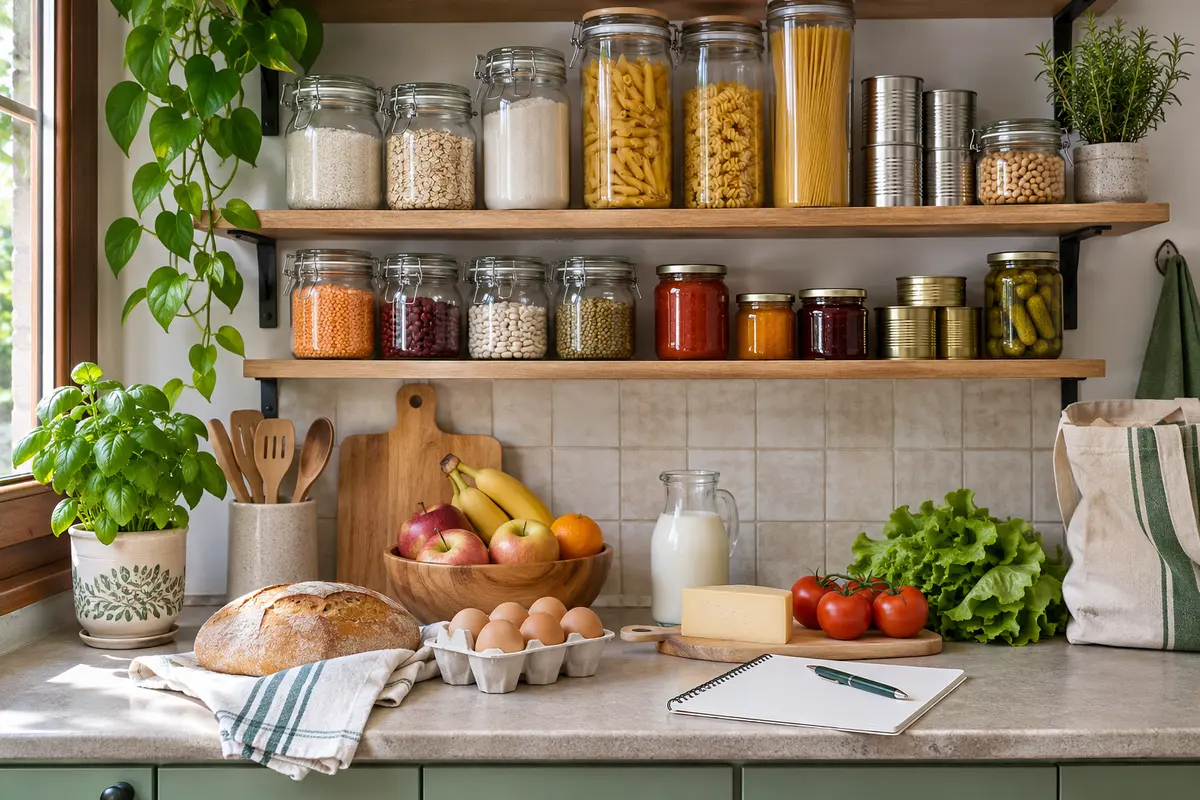
Create a small inventory
Start with one shelf. Note the name, approximate quantity, location and expiry date where relevant.
Understand date labels
“Use by” is about safety, while “best before” primarily describes expected quality.
Organise by zone
Separate everyday food, long-life staples, cleaning products and toiletries, and follow their storage instructions.
Rotate your supplies
Keep products that should be used sooner at the front and place newer ones behind them.
Shop for real consumption
Before buying, check your supplies, planned meals and the storage space you actually have.
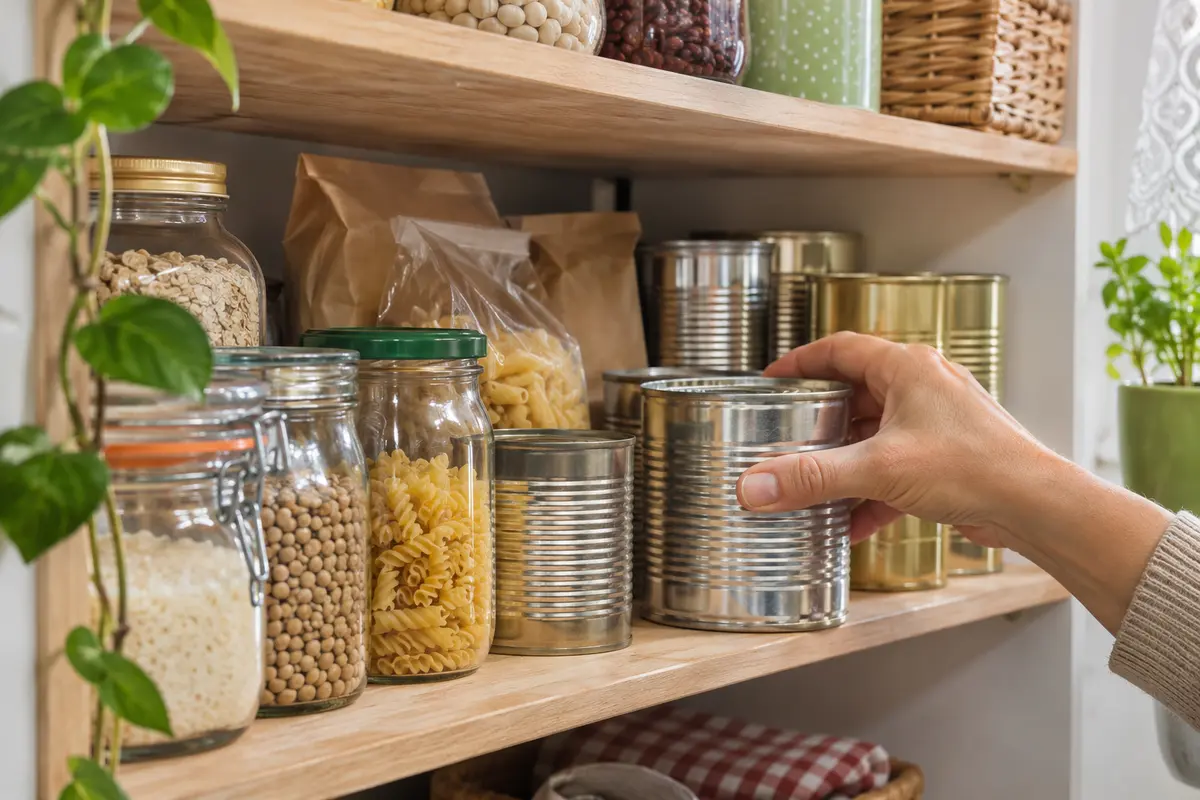
Simple stock rotation
Older at the front, newer at the back
When new products arrive, check their dates first. Keep the items that should be used sooner visible and easy to reach. A few minutes once a week is enough to bring them into your meal plan.
An expiry reminder does not confirm that food is safe. Always follow the label, storage conditions and official food-safety guidance.
Reasonable preparedness
What does a reserve for the first 72 hours mean?
A sensible household reserve is not a call to panic-buy. The right amount depends on household size, age, health needs, pets and current guidance from local authorities. Consider drinking water, food that can be stored safely, essential medicines and hygiene supplies.
Build it gradually from products your household already uses, store them correctly, rotate them and keep a simple paper list of essentials in case power or internet access is interrupted.
Spremly in practice
Know what you have, where it is stored and when it expires
Organised by location
Arrange groceries and essentials by space and subspace.
Dates and reminders
Record expiry dates and check what should be used soon.
QR codes
Label boxes and quickly open their recorded contents.
Household sharing
Share selected spaces and subspaces with access controls.
Want a reminder before a date expires? See how food expiry date tracking works.
Your overview is only as accurate as your updates. Reminders do not replace the instructions on product packaging.
Frequently asked questions
What else should you know?
Is food automatically waste after its “best before” date?+
Not necessarily. Check that it was stored correctly, that its packaging is intact and follow the producer’s instructions. A “use by” date is about safety and must be treated differently.
How often should I check household supplies?+
A short weekly check works well for food with a shorter shelf life, together with an occasional deeper review of long-life supplies.
Do I need a large food stockpile?+
No. A reasonable amount depends on your household, available space and official guidance. Visibility and safe storage matter more than accumulating products.
Can Spremly track expiry dates and send reminders?+
Yes. You can record expiry dates and use reminders, while keeping entries up to date and checking the actual product.
Less waste starts with a clearer overview
A small, accurate inventory is more useful than a large one nobody updates.
Official sources and further reading
This guide does not replace producer instructions, medical advice or local guidance from the relevant authorities.