A guide to a more conscious and peaceful home
Minimalism starts with taking stock, not throwing things away.
You don’t have to live with ten items or give up the things you love. It is enough to know what you have, why you keep it and where it is.
One shelf. One box. One clear decision.

Minimalism is not an end in itself
It’s the space between you and things — clear enough to see what really serves you.
Less pressure, more intention
What is minimalism?
On the Internet, minimalism is often portrayed as an almost empty space. In real life, it looks different for every household.
It’s not a competition
The number of items is not a measure of success. It is more important that the things you own have a purpose, value or genuine meaning.
It’s not deprivation
You don’t have to remove what you love. The goal is to make it easier to recognize what is useful to you and what is just taking up space and attention.
It is not a one-time project
The home changes with you. Minimalism is an occasional rethinking, not a weekend where you have to solve your whole life.
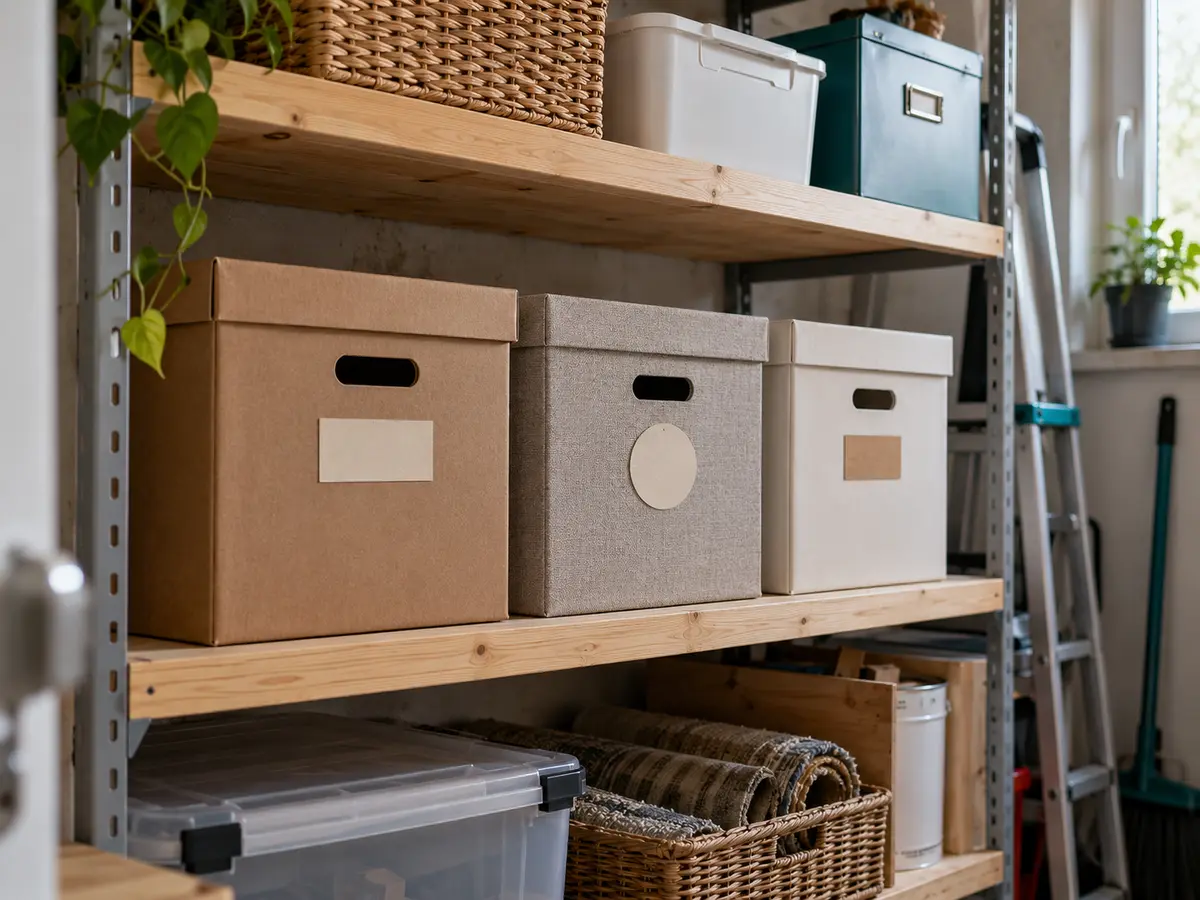
Why does clutter return?
Clutter is often not a matter of quantity. The problem is invisibility.
We buy duplicates because we can’t find what we already have. We store items in anonymous boxes, move them from one zone to another and postpone the decision until “one day”.
- —We don’t know what we already own.
- —Things have no clear place.
- —Duplicates stay out of sight.
- —We don’t have a moment to revisit.
A method that fits into real life
Four steps to a simpler home
Don’t start with the whole apartment. Choose one category, one drawer or one box.
See what you have
Take things out of one small area and put them in a visible place. You cannot make a good decision without seeing everything clearly.
Start with cables, cups or a single shelf.
Decide what stays
Ask whether you use the item, whether it adds value and whether you would choose it again today.
You don’t have to decide under pressure or finish everything at once.
Give it a place
What stays should have a logical, accessible address that fits the way you live every day.
A good place shortens the journey of returning the item.
Keep an overview
Periodically look at the category or space and adapt it to new needs before the excess returns.
Inspection is a habit, not general cleaning.
Decisions without remorse
Four questions for things you’re not sure about
The most time-consuming are not the obvious items, but those that remain between "I need" and "maybe once". Minimalism is not a punishment; it is a way to make the decision visible.
Am I using this in the life I live today?Not in an imagined future, but in your real habits and needs.
Would I choose this again?If you wouldn’t bring the item into your home today, it’s worth considering why you’re still keeping it.
Do I have something that already does the same job?Duplicates are often hidden in different rooms and boxes.
Does it deserve the place it occupies?The value of the item includes the space, maintenance and attention it requires.
Digital clarity for the real home
Spremly helps you see what you choose to keep.
Minimalism does not end with the decision of what remains. Spremly uses artificial intelligence to speed up inventorying, and then saves an overview that you can easily maintain.
List things faster with AITake a photo of the item and start the analysis. AI suggests data, and you review it, correct it and choose what you want to save.
Know what you already haveDigital inventory helps reduce duplicates and unnecessary purchases.
Find without diggingOrganise items by their real spaces and subspaces.
Connect the boxes with QR codesScan the tag and open the associated contents without opening the box.
Share common areasShare a selected space with its subspaces and items while keeping your private inventory separate.
One clear address
You know where it is.
Without opening the box.
Box 3
Winter blankets
Scan the tag and open the contents immediately.
Small steps, visible result
Seven days to a simpler home
Set aside 15 minutes every day. The goal is not the perfect home, but the first system you will want to continue.
A clutter-free entrance
Collect the keys, bags and small things that you carry every day and designate a permanent place for each.
The result: a more peaceful entry into the home
Kitchen duplicates
Look through one drawer or shelf and select items that serve the same purpose.
The result: less searching and shopping
Clothes you don’t choose
Choose ten pieces and keep only those that you actually wear in your current life.
The result: a clearer wardrobe
Cables and electronics
Connect the chargers to the devices, remove the unknown or faulty ones and label what remains.
The result: one clear category
Bathroom supplies
Check open packages, expiry dates and duplicates, then gather all supplies in one place.
The result: visible stock without excess
One box from storage
Open only one box, decide what stays and write clear contents and location.
The result: a box that you no longer have to dig through
Note what remains
Take photos of selected items, request AI data suggestions, and review and confirm what you want to save.
The result: the first list without slow manual input
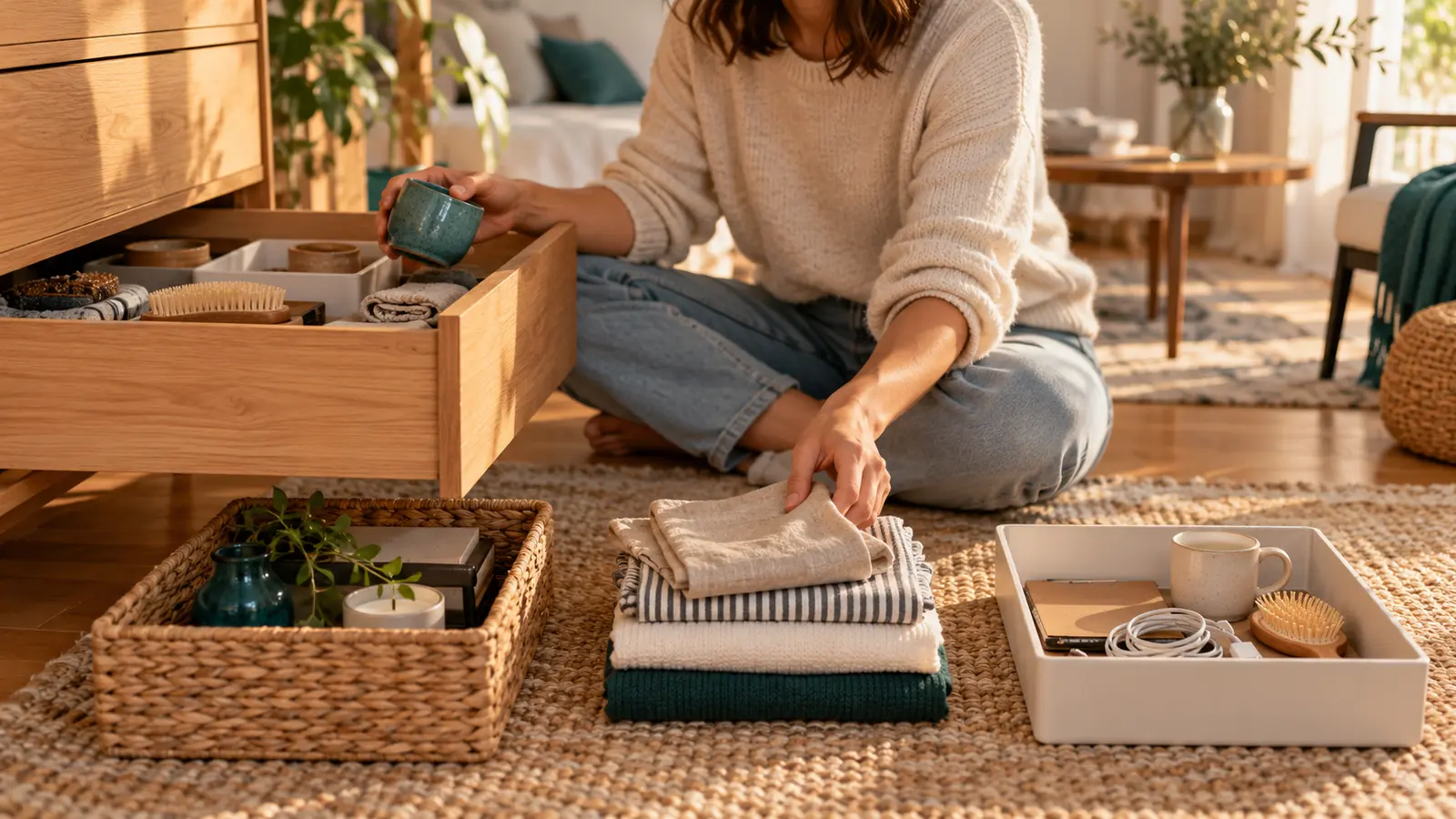
You don’t need less of everything. You need less of what no longer serves you — and a better overview of what remains.
When everything has a reason and an address, the home is more easily restored to balance.
Frequently asked questions
Before you start
Do I have to throw out a lot of stuff to live a minimalist life?+
No. Start by understanding what you already have. Quantity is personal; it is more important that objects have a purpose and a place.
How can I prevent clutter from accumulating again?+
Introduce short periodic reviews, keep clear places, and before making a new purchase, check if you already own something that fulfills the same need.
How does Spremly support minimalism?+
Spremly provides an overview of things by spaces and subspaces, helps you find them, and connects physical boxes with digital content via QR codes.