A home that is easier to use
How to find things at home without constantly searching
Good organisation is not a perfectly styled home. It is a system that tells you where something is when you need it.
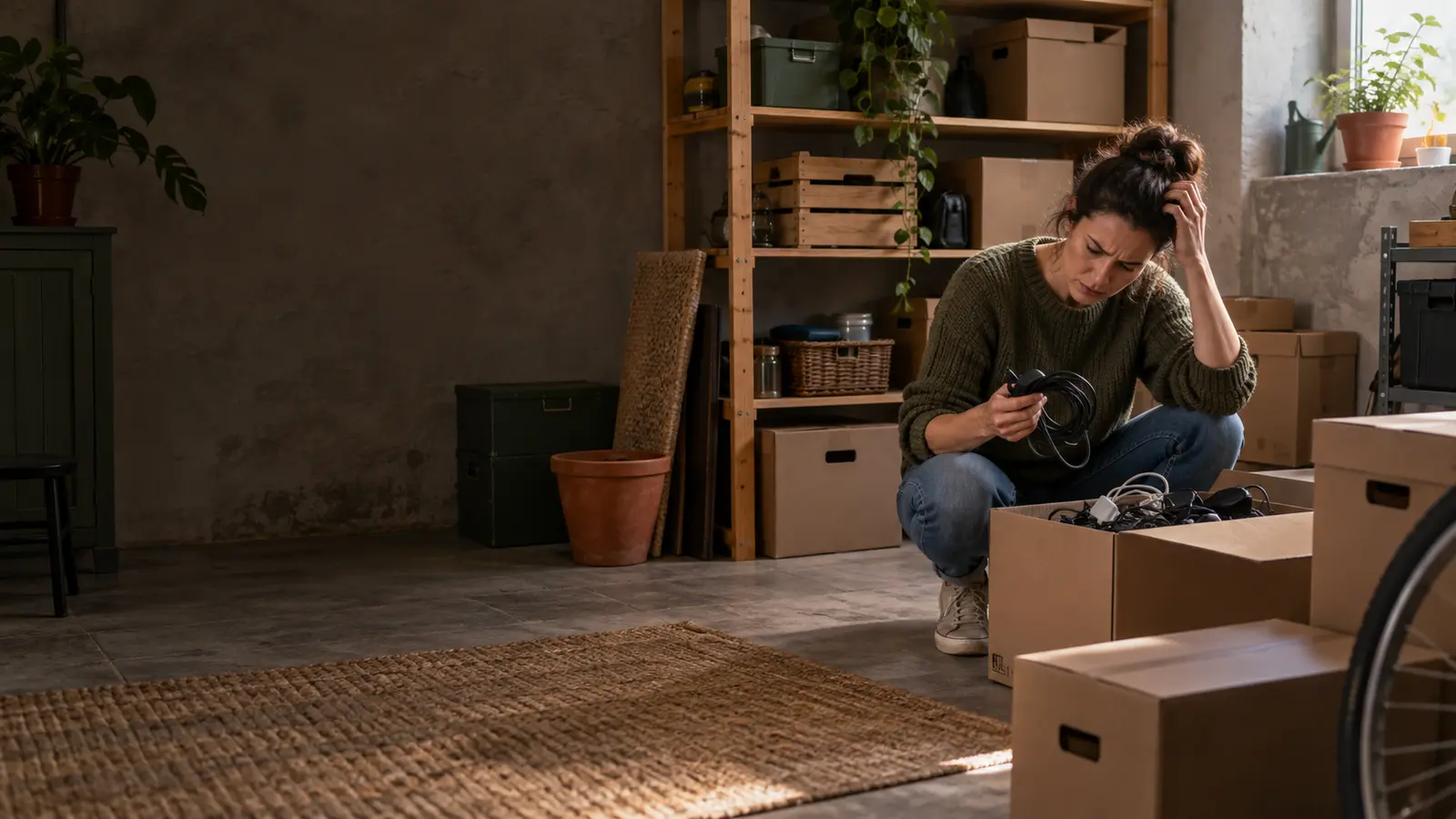
Looking for a charger, winter tyres, a tool, or children’s clothing can feel like a small everyday inconvenience. When it keeps happening, it interrupts the day, creates frustration, and makes it feel as though the home is running us rather than the other way around.
The issue is rarely only that we own too much. More often, we do not know what we have or where something is. A box says “miscellaneous”, a cupboard holds things used only occasionally, and we buy a second one because the first is “somewhere, surely”.
Clutter is not always visible
A living room can look tidy while we still lose time searching for things. This usually happens in basements, garages, storage rooms, attics, cupboards, and boxes for seasonal items — places that are not always in view.
There, clutter is often not a pile of things but a lack of context: we do not know what is in which box, where an item ended up after being moved, or whether the household already owns it. Important documents, warranties, and spare parts exist, but are not available when we need them.
A label on a box helps. Its contents provide the answer.
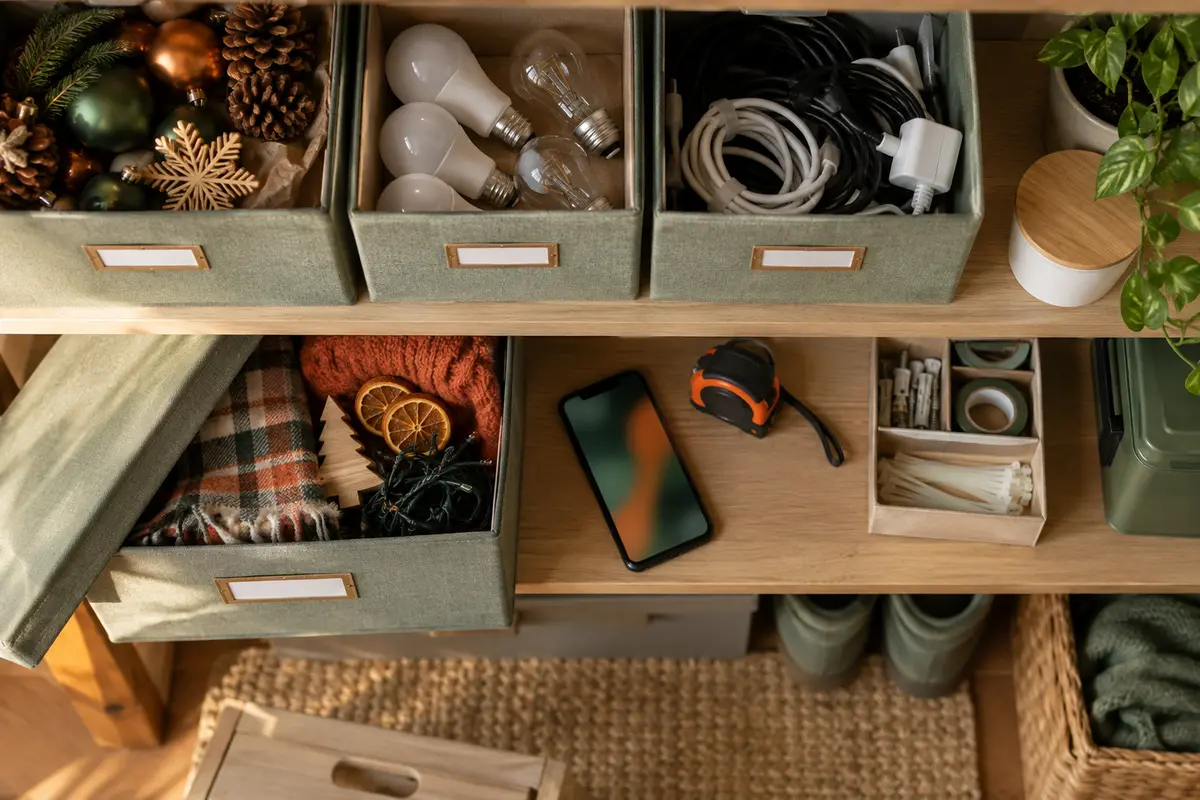
Boxes, shelves, and cupboards are useful only when they lead us to the contents quickly. A label such as “tools”, “winter”, or “miscellaneous” is better than nothing, but it is not enough when we need a specific adapter, string lights, or spare batteries. A physical label still matters; a digital record adds a photo, a detailed name, an exact location, and search.
Duplicate purchases cost more than money
Duplicate purchases usually do not come from carelessness. We cannot find an item when we need it, so we buy another tape measure, extension lead, set of bulbs, or cleaning product. The original then turns up, and the home gains one more item with no clear place.
When household items are not recorded, we rely on memory. Memory is not a good system for dozens of shelves, boxes, and seasonal items. A simple inventory can answer one question before a purchase: do I already have this, and where is it?
Spremly does not replace tidying — it replaces remembering
Spremly creates a digital home inventory: a record of what you own and where it belongs. For each item, you can save a name, photo, and location — for example, “basement → metal shelf → box 3”. Instead of trying to remember whether something is in the garage or storage room, you can search your inventory and get a starting point straight away.
Location
Record the room, shelf, or box.
Search
Find an item using the word you remember.
AI suggestion
A photo can speed up the first entry; you confirm the result.

Start with one place that causes friction
You do not need to record your whole home in one weekend. Pick a box of cables, a tool shelf, seasonal clothing, or a document cupboard. Add a few important items, their location, and a photo where it helps. The next time you find something without digging through boxes, the system will make sense.
For a practical tidying plan, read the 7-step home organisation guide.
A home that is easier to use
An organised home is not a showroom. It is a home where we know where things are, share responsibility more easily, and buy fewer things we already own.
Start with one small step: record one box, shelf, or cupboard. When information about your belongings is available, less time goes into searching and more remains for living at home.